Reasons for Your Doctor to Order Bloodwork Again
How Ofttimes Should You Get Blood Piece of work Done?

Blood tests are some of the nigh commonly ordered workups by doctors, either in laboratory or clinical settings. Non only do blood tests help in early diagnosis, simply they're also of import tools in the cess of actual alter over time. Blood work can consist of many important tests that runway subtle differences in biological markers and aid your doctor diagnose many medical conditions.
Blood tests are routine and some of the most common laboratory procedures. Your physician might unremarkably lodge a blood piece of work panel during a routine physical test, in instance he suspects certain underlying causes of illness, or earlier a major medical procedure. But how ofttimes should y'all become a blood exam? We hash out the recommended frequency, general precautions, and the most common bloodwork procedures below.
How Often Should Yous Go A Blood Exam?
The frequency of your claret work depends on both your health and your doc's discretion. Claret work consists of a variety of different panels that check for very selective components in your blood, including electrolytes, hormones, and special proteins. Blood tests are ordered by your md for three primary reasons:
- Almanac Physical Examination: Your doctor might recommend a blood test during your yearly general physical test. Information technology gives the doctor a take a chance to take a closer expect at the functioning of your trunk and catch any warning signs for several medical conditions early on.
- Underlying Medical Conditions: If you lot have a complex medical history, and suffer from weather condition like obesity, diabetes, heart disease, hypertension, liver and kidney illness, your doctor will recommend more frequent blood tests to monitor your health. Blood work for individuals with underlying conditions tin can range from every 3 months to every half-dozen months.
- Sudden Appearance of Symptoms: The onset of symptoms like shortness of breath, fatigue, frequent urination, swelling in the legs and face, all warrant an immediate doc's appointment. The physician volition guild a tabular array of blood tests to make a detailed assessment of your potential status and eventual diagnosis.
Exist sure to give your doctor a detailed history of your symptoms, medical bug from the by, and too mention your family'southward medical history.

What Does Routine Blood Piece of work Look For?
Blood work contains multiple panels of different tests that look for different components present in your claret and their corresponding levels. Nearly of the tests that make upward a claret panel are important screening tests and are carried out regularly to check for diseases, potential alarm signs, and may be required before major medical procedures like surgery. A few mutual blood tests are:
1. Consummate Blood Count
Blood cell counts estimate the numbers of cellular components of your blood - the cherry blood cells, white blood cells, and platelets. Blood cell counts are extremely commonplace in diagnostic laboratories and hospitals. These tests enable doctors to tell if there's anything incorrect with the counts of your claret cells.
Claret cell counts as well measure out the quantity of hemoglobin nowadays in your blood. Hemoglobin is the primary pigment in the blood that carries oxygen. Alongside hemoglobin, blood cell counts also bespeak hematocrit, or the volume of blood that contains red blood cells. Any abnormal increase or decrease corresponds with underlying health weather and warrants further testing.
Here are some common laboratory values for reference:
- Scarlet Blood Cells:
- Men - four.32 - 5.72 one thousand thousand cells/mcL;
- Women - 3.90 - 5.03 million cells/mcL
- White Blood Cells: 3500 - 9600 cells/mcL
- Platelets:
- Men - 135,000 - 317,000 cells/mcL;
- Women - 157,000 - 371,000 cells/mcL
- Haemoglobin:
- Men - 13.ii - sixteen.6 grand/dL;
- Women - 11.6 - 15.6 m/dL
- Haematocrit:
- Men - 38.3 - 48.6%;
- Women - 35.five - 44.9%
Please note that the values mentioned here are merely for basic knowledge and reference. All reports must be evaluated only by a registered medical professional.
2. Metabolic Console
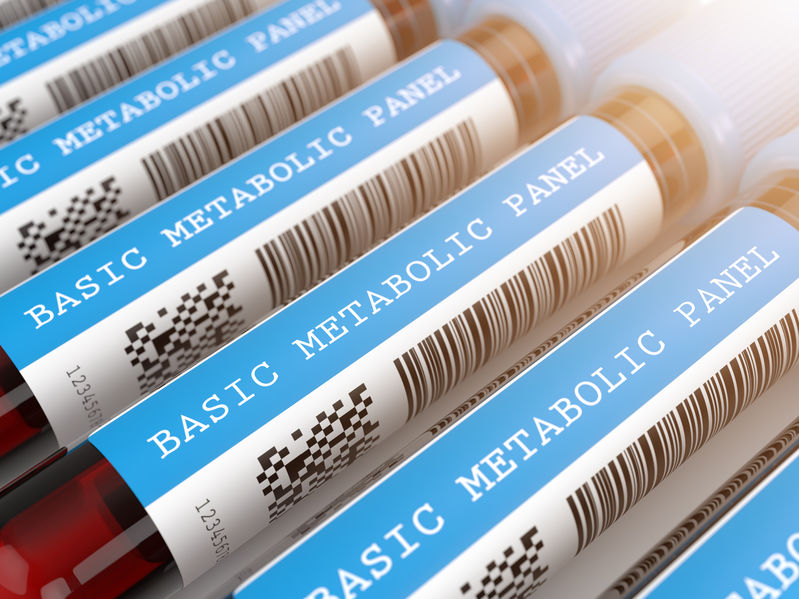
This test looks for various chemically active components in your claret that drive your body's metabolism. The master organs involved in your torso'south metabolism are the kidneys, the spleen, the liver, and the diverse glands. A metabolic panel is a very specific examination that tells your doctor your torso's comprehensive chemic status. A metabolic console looks for -
- Electrolytes and mineral ions similar chloride, potassium, calcium, and sodium.
- Enzymes and markers secreted by the liver, spleen, glands, and kidneys.
- Excretory products like urea, ammonia, creatinine.
- Blood sugar levels and specific proteins that are indicators of organ function.
The exam is highly specific and extremely accurate. Frequently, many early on indicators of disease are detected by observing aberrant values on a metabolic panel.
Reference ranges and normal values for this test are:
- Sodium: 136 - 144 mEq/L
- Potassium: 3.7 - 5.2 mEq/L
- Chloride: 96 - 106 mmol/L
- Calcium: 8.five - x.ii mg/dL
- Blood Glucose: <100 mg/dL (fasting)
- Carbon Dioxide: 23 - 29 mmol/L
- Claret Urea Nitrogen: vi - 20 mg/dL
- Creatinine: 0.eight - ane.2 mg/dL
- Alkali metal Phosphatase (ALP): 44 - 147 IU/50
- Alanine Aminotransferase (ALT): 7 - forty IU/50
- Aspartate Aminotransferase (AST): 10 - 34 IU/L
- Bilirubin: 0.3 - 1.9 mg/dL
- Albumin: 3.5 - five.4 g/dL
- Total Protein: 6 - 8.iii g/dL
3. Blood Sugar Panel
Blood sugar is an important indicator of conditions like diabetes. Both Type-1 and Blazon-ii Diabetes screenings include testing for blood carbohydrate levels. This exam is included in all routine examinations and is especially highlighted in individuals that are obese, have a sedentary lifestyle, are middle-aged, and/or have a family unit history of diabetes.
Elevated blood carbohydrate tin exist caused by the lack of insulin, the resistance of the trunk'southward cells to insulin, or a combination of both reasons. This is the primary crusade of diabetes. Insulin transports the glucose in your blood to your cells to exist used equally fuel. In the lack of this hormone, blood sugar accumulates in the claret and can crusade a lot of long-term complications such as neuropathy, retinopathy, heart disease, and nephropathy (kidney disease). Blood carbohydrate is measured at three different periods:
- Fasting - Tested on an empty breadbasket
- Post Prandial - Tested after a meal
- Random - Tested during any given time of day
Reference values for blood carbohydrate tests are:
- Fasting Claret Saccharide: <100 mg/dL
- Post Prandial Blood Sugar (Subsequently a meal): <180 mg/dL
- Random Blood Carbohydrate: <200 mg/dL
4. Lipid Panel
In that location be freely floating fat droplets in the blood called triglycerides, and complex molecules of fat called cholesterol. The lipid panel measures the level of these molecules in your claret and is an of import risk assessor for heart disease. This test is specifically recommended to obese individuals, people with a family history of middle disease, and individuals approaching middle historic period. The test measures freely floating fat droplets; the triglycerides, high-density lipoprotein (good cholesterol), depression-density lipoprotein (bad cholesterol), and very low-density lipoprotein (the component that creates the greatest risk for heart disease).
Reference values for the lipid panel are:
- Total Cholesterol: <200 mg/dL
- HDL: threescore mg/dL or higher, chance of heart disease increases if 40mg/ dL or lower
- LDL: <100 mg/ dL
- VLDL: five - xl mg/ dL
- Triglycerides: <150 mg/ dL
5. Coagulation/Clotting Function Console
Blood contains several specialized proteins that carry out a complex chain reaction that results in clotting. Blood clots not only prevent loss of blood due to hemorrhage simply are also the most of import components of the body'south healing mechanism. Clots release specific chemicals that signal inflammation in the expanse and subsequent repair of the injury.
The coagulation console is a gear up of tests that determines the speed of your trunk's clotting factors. A diversity of weather, medications, and predispositions tin result in either a quicker or delayed clotting response. A clotting function panel has three primary components:
- Prothrombin time
- Fractional Thromboplastin time
- International Normalized ratio
Any aberrant values can indicate underlying medical weather condition and your doc may call for further testing. A range of normal values for this console are:
- PT: 10 - 12 seconds
- PTT: 30 - 45 seconds
- INR: one - ii
6. Thyroid Function Panel
The thyroid gland is one of the well-nigh important glands in the body. Though the gland weighs merely about an ounce in adults, it carries out essential functions related to growth, metabolism, and normal body office. The thyroid achieves this by secreting a fix of hormones called Tri-iodothyronine (T3) and Thyroxine (T4). The functioning of the thyroid is also adamant by a hormone called the thyroid-stimulating hormone, secreted by the pituitary gland. The thyroid panel judges the levels of these three hormones alongside the level of binding of a detail T3-binding protein called thyroxine-binding globulin. The doctor tin can make further diagnoses based on elevated or reduced levels of these hormones and parameters, and can also lodge more tests.
Reference values for this panel are:
- T4: 4.6 - 12 ug/ dL
- T3: 80 - 180 ng/ dL
- TSH: 0.5 - 6 uU/ mL
- T3RU: 23% - 37%
7. Enzyme Markers Console
Enzymes are biological catalysts that bulldoze the molecular footing of metabolism and trunk office. Analyzing the levels of enzymes and whatever linked abnormalities can help your medico with a pinpoint diagnosis and a timely handling program. The ordinarily employed enzyme marker panel tests are:
- CPK1: An enzyme establish in the brain and lungs.
- CPK2 & iii, Troponin: Enzymes found in the cardiac muscles.
Abnormalities in the levels of these enzymes can indicate trauma, cancer, cardiac arrest, and centre attacks. Normal values for these enzymes are-
- CPK1: 200 U/ L
- CPK2: v - 25 IU/ L
- CPK3: 200 U/ L
- Troponin: <0.ii ng/ mL
8. DHEA & Sexual activity Hormones Panel
The production of testosterone dominates in sexually mature men, whereas the production of estrogen dominates in sexually mature women. The two are steroid hormones synthesized by the body following the development of secondary sexual characteristics. Both hormones are synthesized from a hormone called Dehydroepiandrosterone (DHEA). DHEA is secreted past the adrenal gland. Understandably, the levels of DHEA are the highest in young adults and reduce with advancing age. Abnormally high or low levels of DHEA might signal different weather in men and women like PCOS, erectile dysfunction, and tumors of the pituitary and adrenal gland.
Reference ranges for DHEA levels are:
- Men: 280 - 640 ug/ dL
- Women: 65 - 380 ug/ dL
nine. Sexually Transmitted Diseases
For individuals with multiple sexual partners, it is important to get screened for STDs regularly. Diseases like chlamydia, gonorrhea, syphilis, HIV, canker, and hepatitis can sometimes remain undetected. Specific testing and screening might be required to notice these diseases. Consider beingness tested in case you lot have a new sexual partner as well. Regular screening ensures your own and your partners' condom.
10. C-Reactive Protein Panel
When the body undergoes inflammation, the liver produces a protein called C-Reactive Protein. It indicates massive trauma, intoxication, poisoning, autoimmune diseases, and center disease. C-Reactive Protein tests are of import in the early diagnosis of serious diseases like those affecting the center. Elevated C-Reactive Protein indicates a raised gamble to the eye. Here are some values for reference-
- Ideal or Low Take chances: <1 mg/ 50
- Intermediate Take chances: 1 - 2.9 mg/ L
- High Hazard: >three mg/ L
- Very High Run a risk: >ten mg/ L
How Long Does Blood Work Take?
Most blood tests take between 24 and 72 hours after sample collection. Though this varies depending on the laboratory and the nature of the tests, this is the median waiting catamenia. Most labs volition release your test results directly to your md'southward office or a patient-dedicated web portal.
What Should You lot Consume Before Claret Work
Nearly doctors recommend you maintain an empty breadbasket before sample collection. Food tin affect parameters like claret sugar, lipids, metabolic panels, and liver role tests. A fasting menstruum of eight hours should suffice. Be sure to schedule your sample drove right earlier breakfast in the morning to avoid daytime fasting.
The Procedure & Its Importance
The procedure is elementary and is performed past a trained phlebotomist, who volition sanitize the skin over your vein before collecting the sample. The samples will be collected in a few exam tubes based on the number of tests and their requirements. The area of puncture is covered with a sterile cast or cotton.
Blood work happens to be the most widely performed diagnostic exam. The test is commonplace in laboratories, private practices, and hospitals due to its cost-effectiveness, loftier specificity, and minimally invasive approach. Be certain to contact your healthcare provider for further queries on claret work or in case you lot recollect you lot demand a examination.
Source: https://www.lencolab.com/publications/2021/4/how-often-should-you-get-blood-work-done.html
0 Response to "Reasons for Your Doctor to Order Bloodwork Again"
Postar um comentário